
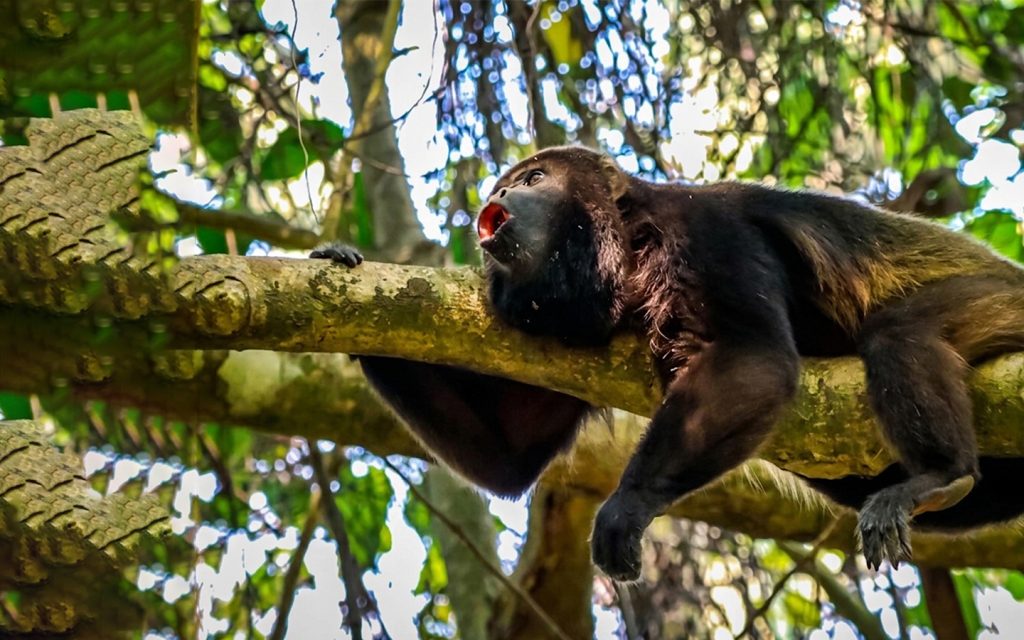
The Importance of Howler Monkeys in Ecuador’s Coastal Ecosystems
Howler monkeys are among the most fascinating and recognizable wildlife species found in Ecuador’s coastal region. Known for their powerful vocalizations that can be heard from several kilometers away, these monkeys play an important role in the biodiversity and ecological balance of tropical forests near Guayaquil and other protected natural areas of Ecuador.
Ecuador is home to different species of monkeys, but howler monkeys are especially associated with mangroves, tropical forests, and protected reserves located along the coast. Their deep calls are often heard during the early morning and late afternoon, creating one of the most characteristic sounds of the tropical forest ecosystem.
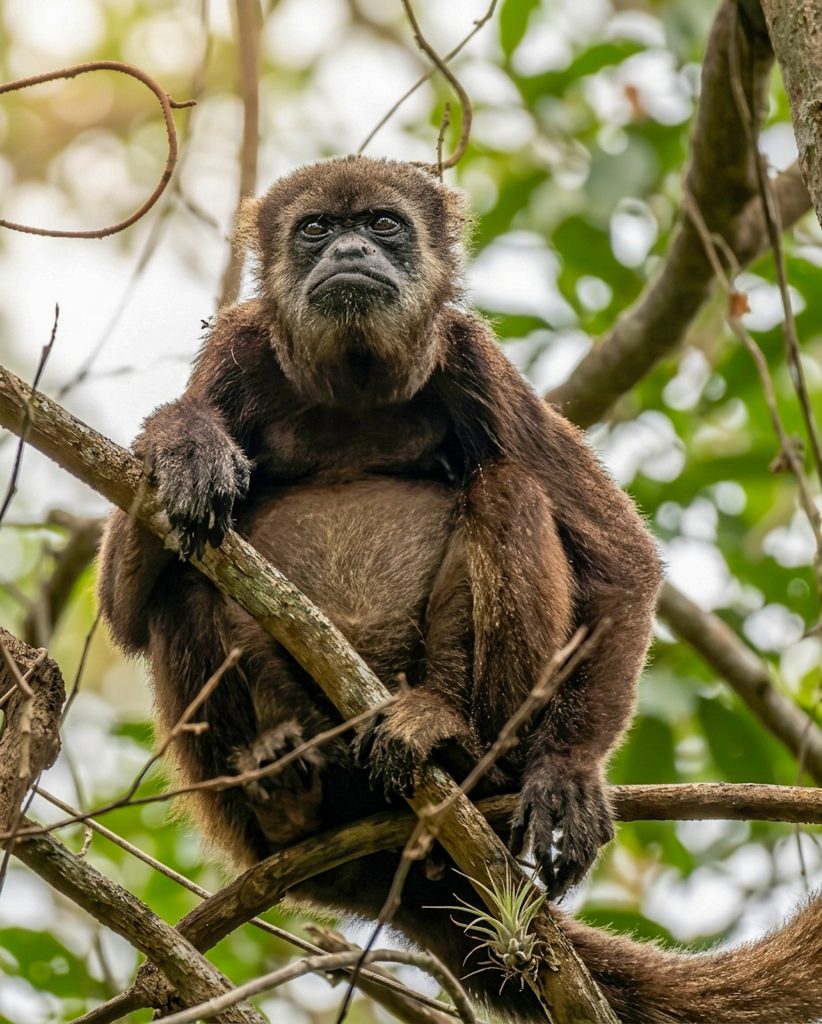
Howler monkeys spend most of their lives in the trees.
Howler monkeys spend most of their lives in the trees, where they move carefully through the forest canopy searching for leaves, fruits, flowers, and seeds. Unlike some other monkey species, howler monkeys are generally calm and slow-moving animals that conserve energy due to their leaf-based diet. These primates play an essential role in forest regeneration and seed dispersal. As they travel through the forest and consume fruits from different trees, they help spread seeds across large areas, contributing to the natural growth and health of tropical ecosystems. Because of this ecological function, howler monkeys are considered important for maintaining biodiversity in Ecuador’s forests.
Protected areas near Guayaquil, including ecological reserves and mangrove forests.
Protected areas near Guayaquil, including ecological reserves and mangrove forests, offer visitors opportunities to observe howler monkeys in their natural habitat. Wildlife tours often combine birdwatching, mangrove exploration, and nature walks where travelers can experience the sounds and biodiversity of Ecuador’s coastal ecosystems firsthand. For many visitors, hearing the vocalizations of howler monkeys becomes one of the most memorable parts of exploring Ecuadorian nature. Their calls create an immersive atmosphere that reflects the richness and wild beauty of tropical forests.


Conservation efforts continue to be important for protecting howler monkey populations and their habitats. Deforestation, habitat fragmentation, and environmental changes can affect wildlife populations throughout the region. National parks, ecological reserves, and sustainable tourism initiatives help preserve these ecosystems while promoting environmental education and responsible tourism.
Ecotourism activities focused on wildlife observation also provide economic benefits for local communities, guides, and conservation projects. By supporting sustainable tourism, visitors contribute to the protection of Ecuador’s biodiversity and help raise awareness about the importance of conserving tropical ecosystems for future generations.
In conclusion, howler monkeys represent an important part of Ecuador’s natural heritage and coastal biodiversity. Their presence highlights the ecological richness of the country’s forests and offers travelers a unique opportunity to connect with nature while discovering one of the most iconic species of Ecuador’s tropical ecosystems.