

Why Ecuadorian Cocoa Is Famous Worldwide?
Ecuador is internationally recognized as one of the world’s most important producers of fine aroma cacao, a variety prized for its floral aroma, complex flavors, and exceptional quality. For centuries, cacao has played a central role in Ecuador’s culture, agriculture, economy, and daily life, becoming one of the country’s most valuable products and an essential part of its national identity.Unlike mass-produced cacao used in industrial chocolate production, Ecuadorian cacao is celebrated for its distinctive aromas, smooth texture, and natural flavor complexity. Many cacao farms continue to preserve traditional cultivation methods that combine ancestral agricultural knowledge with sustainable farming practices passed down through generations. The tropical climate, fertile soils, abundant rainfall, and natural humidity of Ecuador create ideal conditions for producing some of the finest cacao in the world.

One of Ecuador’s most iconic varieties is “Cacao Nacional,” also known internationally as Arriba cacao. This unique cacao is highly appreciated by chocolatiers and chocolate makers around the world for its delicate aromatic profile, which may include floral, fruity, nutty, and earthy notes. Today, Ecuador remains one of the leading global exporters of fine aroma cacao, supplying premium chocolate brands and artisanal producers across Europe, North America, and Asia.
The history of cacao in Ecuador dates back thousands of years.
Archaeological discoveries suggest that cacao was already consumed by ancient civilizations inhabiting the Ecuadorian coast long before European colonization. Over time, cacao became one of the country’s most important export products and helped shape the economic and cultural development of many rural communities.
The cacao process begins long before chocolate reaches the table. Farmers carefully cultivate cacao trees under tropical shade, harvest the ripe pods by hand, ferment the beans to develop their aromas, dry them naturally under the sun, and roast them to enhance the flavors that make Ecuadorian chocolate truly unique. Every stage of the process requires patience, experience, and attention to detail.
Visiting a cacao farm
Offers travelers the opportunity to experience this fascinating process firsthand while connecting with local traditions and rural communities. Guests can walk through tropical plantations, open fresh cacao pods directly from the trees, learn traditional chocolate-making techniques, roast cacao beans, grind cacao manually, and prepare artisanal chocolate using rustic methods still practiced in many regions of Ecuador.
In areas near Guayaquil and along Ecuador’s coastal region, cacao experiences often combine agriculture, gastronomy, biodiversity, and cultural heritage. Travelers not only learn about chocolate production but also discover the deep relationship between cacao, local cuisine, family traditions, and the livelihoods of farming communities.

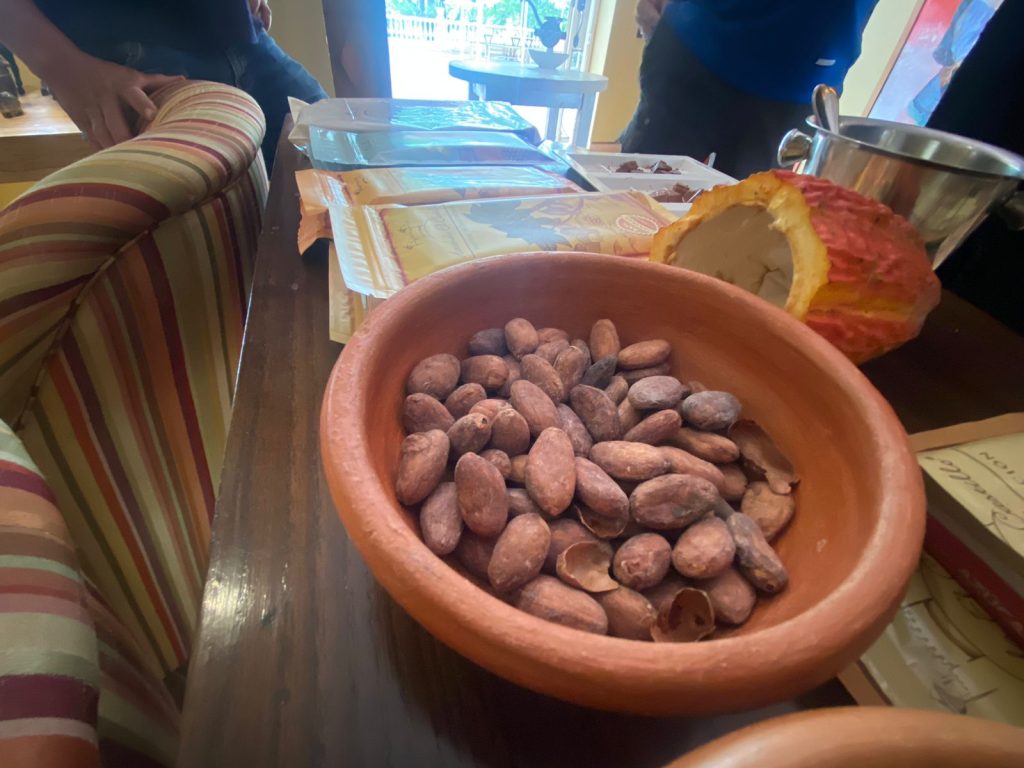

Beyond chocolate itself, cacao represents history, identity, sustainability, and cultural heritage. It connects generations of farmers, preserves traditional agricultural practices, supports rural economies, and allows visitors to experience Ecuador through one of its most emblematic and internationally admired products.
For many travelers, visiting a cacao plantation becomes more than a culinary experience; it is an opportunity to understand the origins of chocolate, connect with nature, and appreciate the cultural richness behind one of Ecuador’s greatest treasures.